The stone-dial trend has well and truly crept into the microbrand and independent watch industry, and it hasn’t left yet. I don’t think it is going anywhere anytime soon, either.
We frequently see brands introducing stone-dial versions of existing watches, as well as coming up with entirely new models designed around them. One of the latest examples comes from Nivada Grenchen, which recently announced a number of stone-dial versions of its F77 Mk II.
Stone dials, of course, are nothing new to watchmaking. They were particularly prominent during the 1960s and ’70s before gradually fading from the spotlight. And then they came back, seemingly stronger than ever. Natural-stone dials have appeared across major luxury watchmaking, and the microbrand and independent industry clearly wanted a piece of it too.
The interest certainly appears to be real. Otherwise, we probably wouldn’t see more and more brands jumping on the bandwagon. I was curious about how much enthusiasm there actually is among watch buyers, so I had a look at search interest. According to the Google Trends data I checked, search interest for the term “stone dial watches” increased by more than 5,000% over the past 12 months compared with the preceding year. That was a little hard for me to believe, but apparently, that’s what Google says.
What Stones Are Getting Into Our Watches, and Where Do They Come From?
First, we are generally talking about natural decorative stones here—not diamonds, emeralds or the other precious stones you might immediately associate with expensive jewellery. Instead, we are talking about stones found in nature valued primarily for their colours, patterns, textures and distinctive visual characteristics.
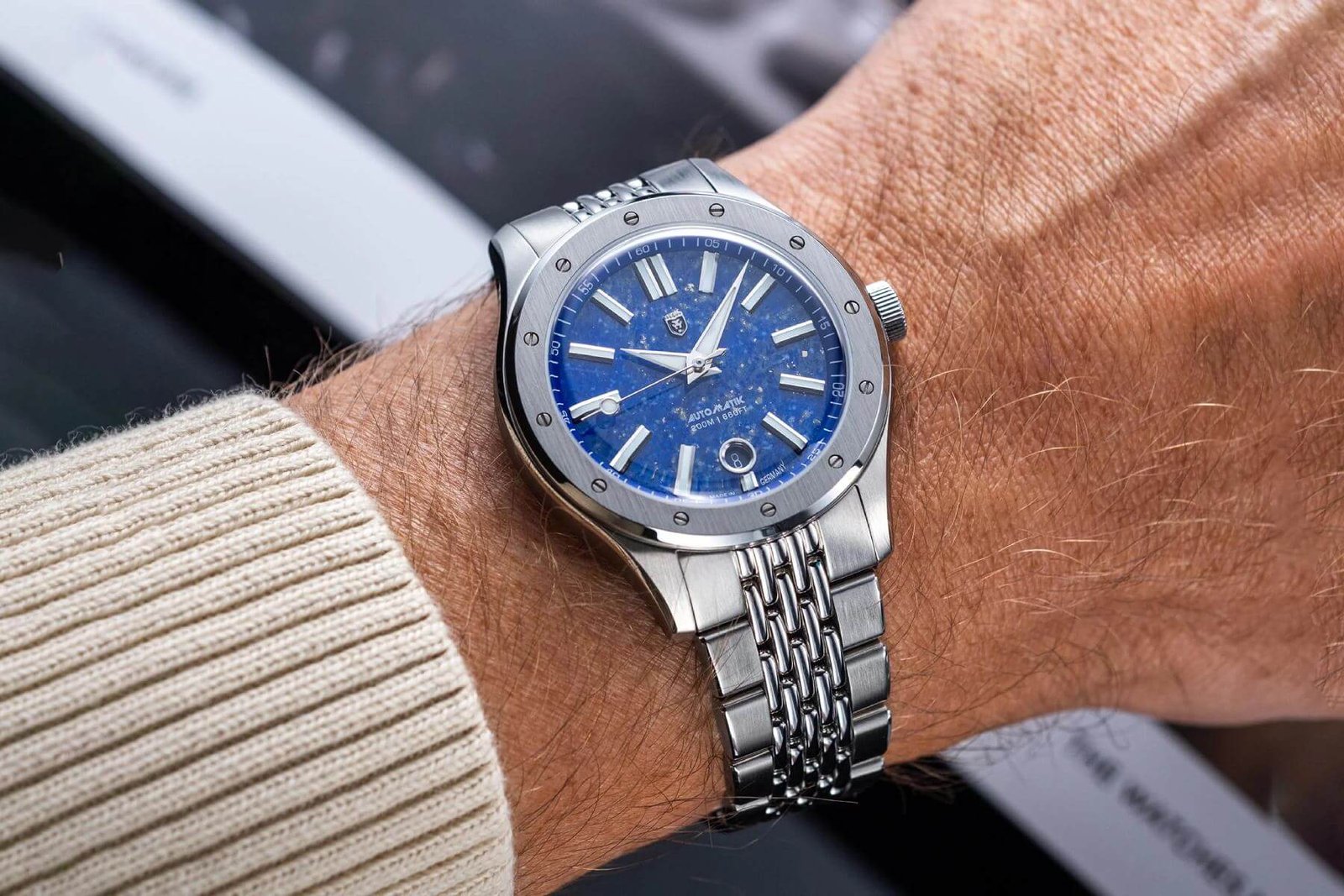
Black onyx, Tiger’s Eye, malachite and lapis lazuli are some of the most popular choices for natural stone dials in microbrand watchmaking.

Then there are many other stones used for watch dials as well, including snowflake obsidian, jade, pietersite, opal, tiger iron, agate, jasper and albite.

Each of these stones can bring its own unique visual characteristics to a watch. Black onyx, for example, is known for its deep black appearance, while snowflake obsidian is characterised by distinctive snowflake-like patterns scattered across its dark surface.
Before going any further, let me make something clear: I am neither a geologist nor a stone collector, so I am unable to give you an in-depth geology lecture on how every one of these materials formed. What I find fascinating, however, is just how varied their origins can be.
Natural stones occur in many different geological environments. Some materials can be found as loose rocks and pebbles in rivers and other exposed areas. To an untrained eye, some may look like completely ordinary pieces of rock from the outside. Cut them and see inside, the patterns and colours inside can be truly mesmerising.
Other materials reside within rock formations and deposits that have to be mined or quarried. Their origins also take us all over the world. Tiger’s eye is particularly associated with South Africa, although deposits occur elsewhere. Australia is famous for its opal, while lapis lazuli has an extraordinary historical connection with Afghanistan. Malachite occurs in copper-rich regions around the world, with major deposits in Central and Southern Africa. Then there is Snowflake obsidian, which can be found in volcanic regions around the world.
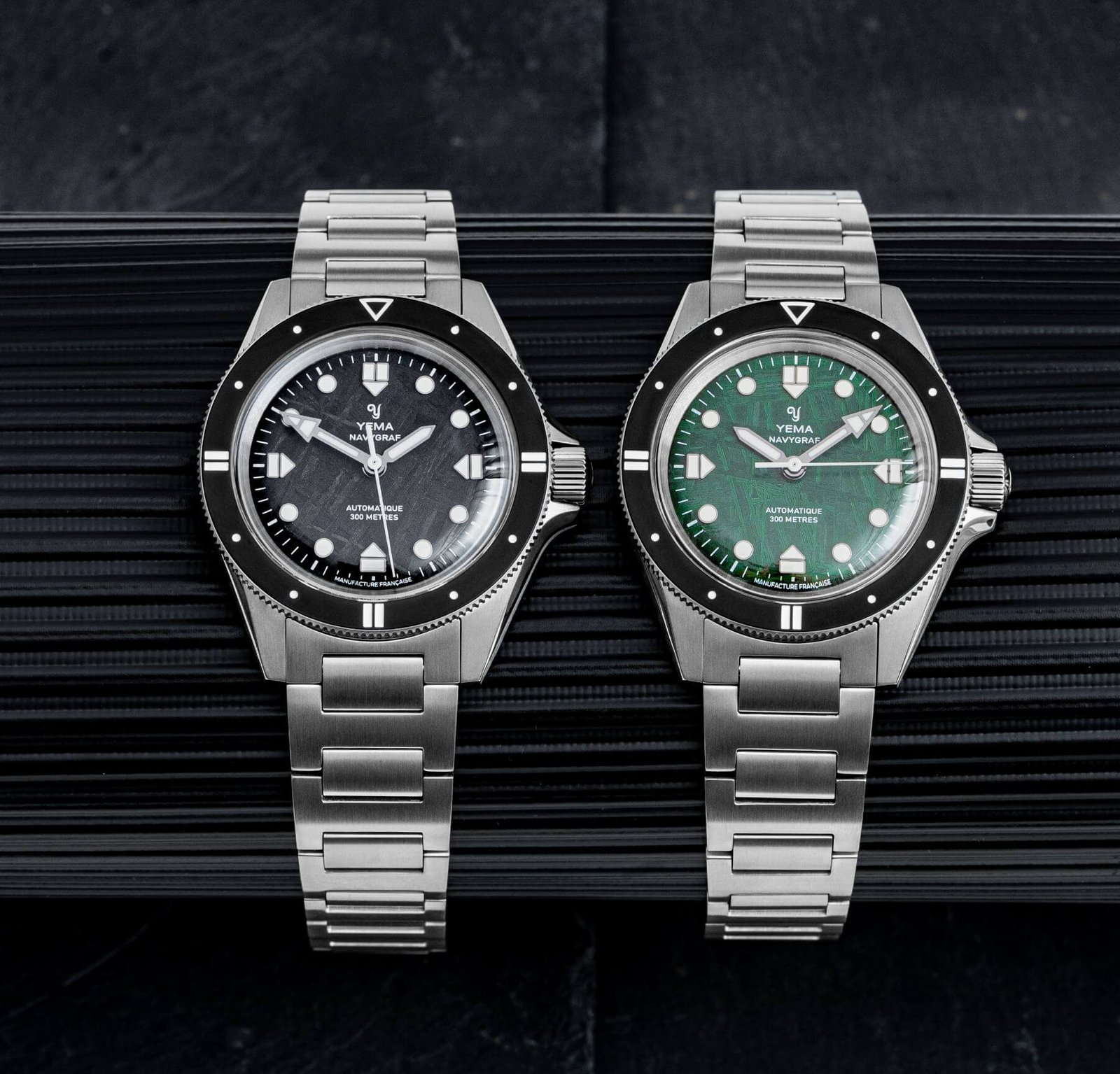
Then there are meteorite dials. These are cut from pieces of meteorites that travelled through space before eventually reaching our planet. Strictly speaking, meteorite isn’t a stone in the same sense as malachite or tiger’s eye, but if we’re talking about unusual natural materials finding their way onto watch dials, it certainly deserves a mention.
Why Are Stone Dials Appealing to Many Collectors?
1. When Nature Does the Designing
Watchmakers traditionally use a variety of techniques to create ornamentation on a dial. For example, colours, textures, guilloché patterns and typography—or a combination of several of these—can all be used to make a dial visually interesting.
With stone-dial watches, the material taken from nature and cut into the dial becomes the ornamentation itself. Many of these stones, formed through geological processes over thousands or even millions of years, have beautiful combinations of colours, veins, patterns and inclusions that give them their own distinctive character. You don’t necessarily need an elaborate dial design when the material is already doing most of the visual work.
There is also something about wearing natural stone that appeals to many people. Stones have been used in necklaces, rings and other forms of jewellery for centuries. A stone-dial watch brings some of that same attraction to the wrist.
2. The Appeal of a Unique Dial Pattern
A watch dial made from such a natural stone can have a certain character, making it different from dials created using traditional decoration techniques. Also, despite their current popularity among watch enthusiasts, stone dials are still relatively unusual on people’s wrists. You are far less likely to encounter someone wearing a malachite, lapis lazuli or tiger’s-eye dial than someone wearing a conventional lacquered or sunburst dial from a Seiko or Citizen.
Even if you meet another watch aficionado wearing the exact same stone-dial watch, chances are their dial will look slightly different from yours. The veining, inclusions and distribution of colours can differ from one slice of stone to another, meaning two watches of exactly the same reference may have noticeably different dials.
3. Stones and Their Symbolic Meanings
Stones have also acquired various symbolic and spiritual meanings across different cultures and traditions. Onyx, for example, is often associated with protection and strength, while malachite has been associated with transformation and growth. Tiger’s eye is commonly linked with courage and confidence, while jade has a long association with prosperity, harmony and good fortune.
How many watch collectors — a group that is still predominantly made up of men — are actually choosing their watches because of the spiritual meaning associated with the stone? I have absolutely no idea.
So, How Does a Stone Become a Watch Dial?
At a high level, a piece of natural stone is carefully cut into an extremely thin slice, often less than a millimetre thick, before being shaped and polished to form the dial. Depending on the construction, the stone may also be bonded to a supporting base underneath.
Openings then need to be made for the hands and, depending on the watch, other elements such as a date window or applied hour markers.
Working with stone at such a small thickness can be a more delicate process than working with conventional dial materials. Natural stone can crack or break during cutting and finishing, resulting in a relatively high rejection rate. Some stones are considerably more difficult to work with than others. Once completed and installed in the watch, however, the stone largely stays protected behind the crystal.
Popular Microbrands and Independent Brands Offering Stone Dials
Dennison is probably one of the names most closely associated with the recent return of affordable stone-dial watches in the microbrand industry, but it is far from alone. An increasing number of microbrands and independent watchmakers are experimenting with natural stone.
- MAEN — The Manhattan 37 is available with natural-stone dials including Black Onyx, Golden Swan and Snowflake Obsidian.
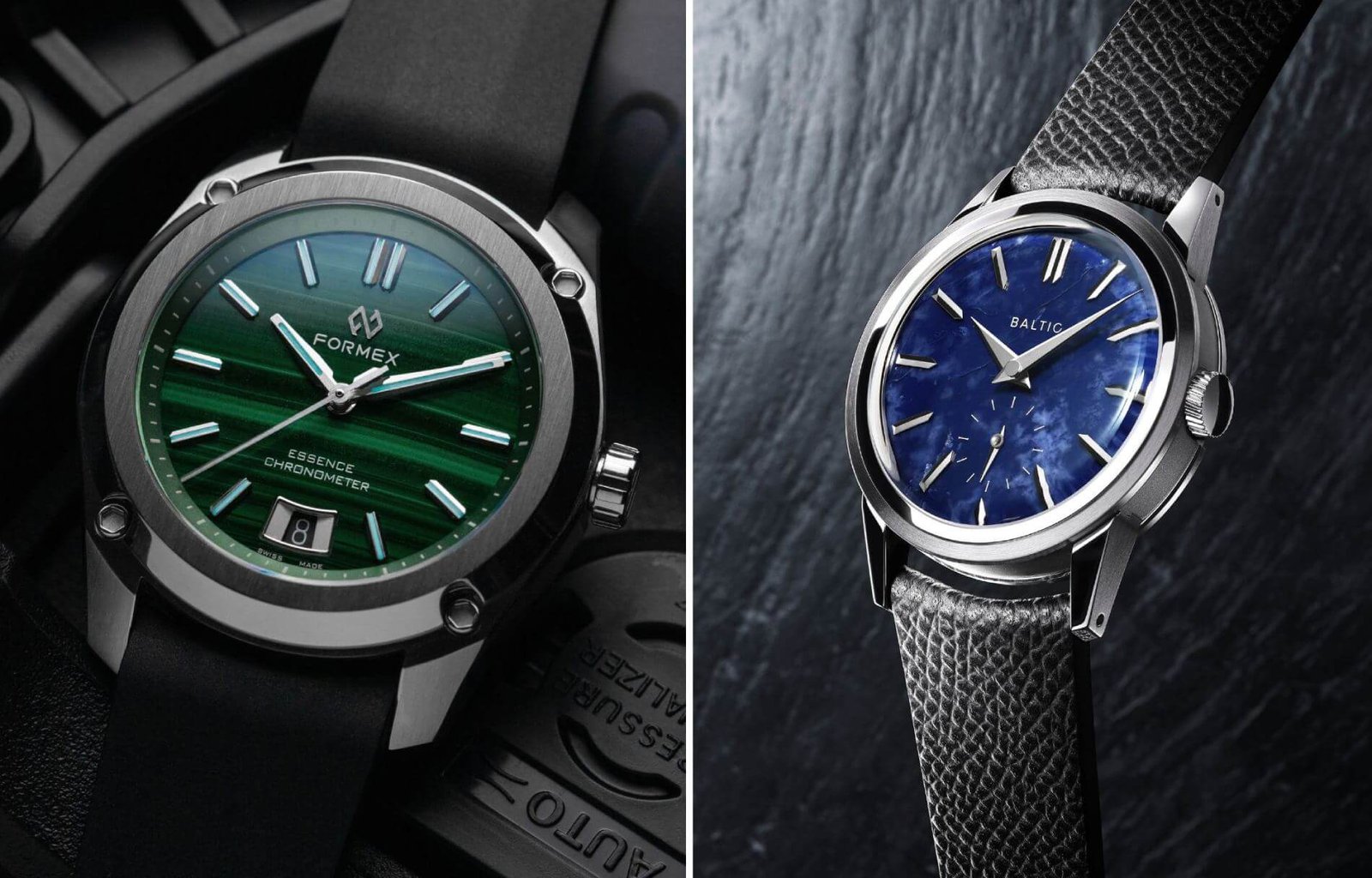
- Baltic — Its dressier Prismic series has featured stones including dumortierite and pietersite.
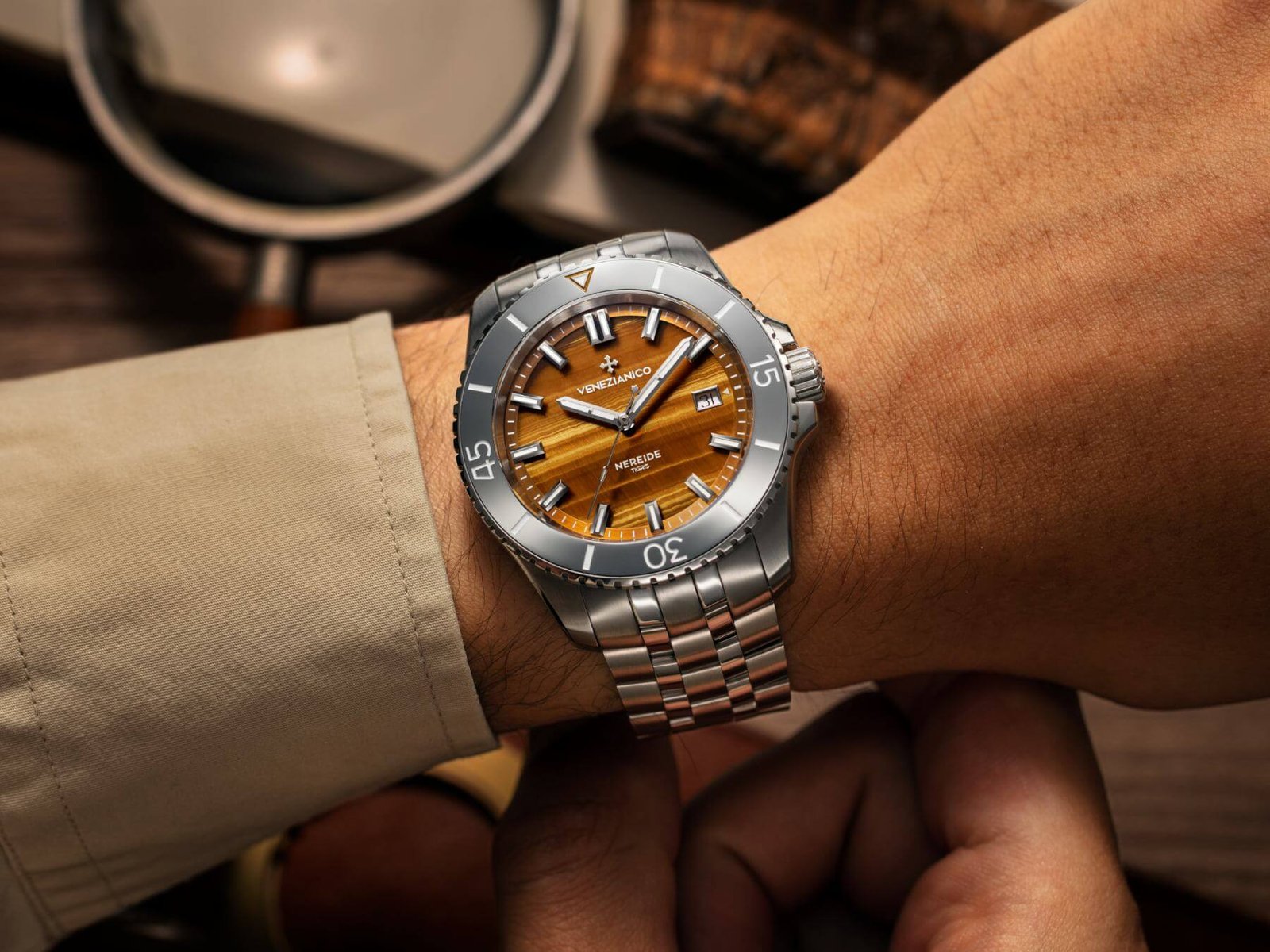
- Venezianico — The Nereide collection has featured stones including malachite, lapis lazuli and tiger’s eye in its dials.
- Heinrich — Its Helicoprion collection includes lapis lazuli, carnelian, tiger’s eye, tiger iron and amethyst.
- Farer — Malachite has appeared in the Integra collection, while Eisenkiesel has found its way into the Straton Moonphase.
- Christopher Ward — The C63 Sealander has been offered with malachite, tiger’s eye, charoite and turquoise dials.
- Brew — Metric Lite is offered in Tiger’s Eye stone.
- Formex — The Essence collection has explored both natural-stone and meteorite dials.
- Anders & Co — Stone dials feature in both the AC1 chronograph and AC2 Volcán, both affordable and beautiful watches.
- Atelier Wen — Natural stone has made an appearance within the Perception collection.
- Sartory Billard — The SB04-E series includes options using stones such as pietersite and chrysocolla.
- YEMA — The Navygraf is now available in two meteorite-dial variants.
- Nivada Grenchen — The F77 integrated-bracelet sports watch is available in several natural stones, including lapis lazuli, malachite and black onyx.
- Wise — The Adamascus dive watch is available with a tiger iron dial.
- Henry Archer — Many stone-dial variants across several of its collections.
- Loresum — Its wide selection of stone-dial watches makes it an interesting alternative to Dennison for those looking for a similar dressy aesthetic.